Whiskey fungus removal, done the right way
That flat black coating creeping back across your siding is whiskey fungus, fed by the bourbon aging all around you. We soft wash it off at the source and keep it from taking over again.
It is not dirt, and it is not going away on its own
Whiskey fungus is Baudoinia compniacensis, a fungus that feeds on the ethanol vapor rising off aging bourbon barrels. In Nelson County, the bourbon capital of the world, there is more of that vapor in the air than almost anywhere on earth, which is why homes here turn black faster than a normal wash can keep up with. Learn exactly what it is and how it is removed →
One fungus, every surface it touches
Whiskey fungus does not stop at your siding. We remove it everywhere it grows, cleaning and restoring each surface the right way.
Roof cleaning
Shingle-safe soft washing that lifts the black without stripping granules.
Learn more →Fence & deck
Clears the fungus out of the grain without splintering or stripping the wood.
Learn more →Concrete & driveway
Removes embedded black and grime and restores a clean, safe surface.
Learn more →Commercial
Storefronts, offices, and multifamily kept presentable on a schedule.
Learn more →Soft washing, not blasting
Pressure washing damages siding and only rinses the surface, so the black comes back in months. We do it the way that lasts: real whiskey fungus remediation that kills the growth at the root and restores the surface underneath.
Inspect
We look at every affected surface, siding, roof, fence, and concrete, and identify how heavy the growth is.
Treat & dwell
A low-pressure cleaning solution kills the fungus at the root and is given time to work. No high pressure against your surfaces.
Rinse & protect
A gentle rinse clears the black away, and an annual plan keeps it from taking hold again.
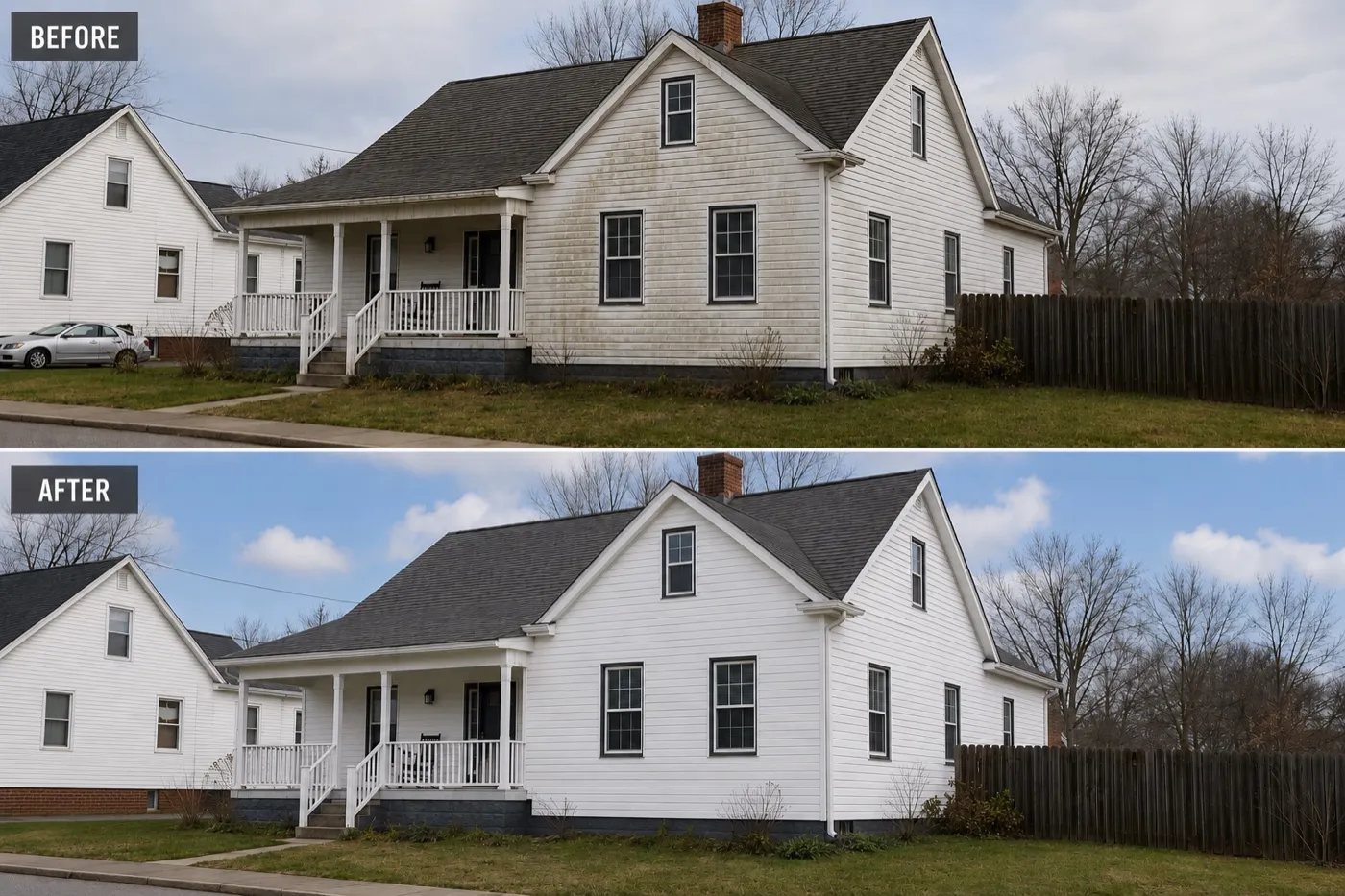
From black and streaked to bright and clean
The same soft-wash method across a whole home exterior. This is what whiskey fungus removal looks like.

Whiskey fungus, answered
What is whiskey fungus?
Whiskey fungus is a black, sooty fungus named Baudoinia compniacensis, known locally as bourbon fungus. It feeds on the ethanol vapor released as bourbon ages in barrels, the so-called angel's share, and grows on almost any outdoor surface near an aging warehouse.
Why does my house keep turning black?
Because you live near a source of ethanol vapor. Bardstown and Nelson County hold one of the densest concentrations of bourbon-aging warehouses in the world, and that vapor feeds the fungus that coats siding, roofs, fences, and concrete. Ordinary washing removes what you can see but not the growth itself, so it returns.
Is whiskey fungus dangerous?
It has not been established by health authorities as a significant hazard to human health, and it is not the toxic black mold people worry about indoors. The real harm is to property: it stains surfaces, holds moisture against siding and wood, shortens the life of paint and shingles, and makes walkways slick.
Will it come back after cleaning?
Yes, as long as barrels age nearby. There is no permanent one-time cure while the ethanol source is still operating. The practical solution is periodic maintenance cleaning and remediation, usually once a year, which keeps your property clean and protects the surfaces underneath.
Planning ahead? Soft washing pauses during Kentucky's freezing months, and early-spring slots fill fast. The fungus does not take the winter off, so the smart move is to book now. See the best time of year to remove whiskey fungus →
Serving Bardstown and all of Nelson County
If you are near a distillery or an aging warehouse, you are in our service area: Bardstown, Bloomfield, New Haven, Cox's Creek, Fairfield, Chaplin, and everywhere in between. See the full service area →
Ready for a clean exterior?
Free on-site quote for whiskey fungus removal in Bardstown and Nelson County. No pressure, no obligation.
Tell us about your property
Send a few details and we will get you a straight price. Or call (502) 431-2856 and talk to a real person.
- No obligation and no pushy sales
- Soft-wash method that is safe for your surfaces
- Ask about annual maintenance to keep it from coming back